Cold-weather running
How to keep running through a Chicago winter
How to dress for cold, wind and ice, when to skip a run, and how a group keeps you going through a Chicago winter, from runners who do it every year.
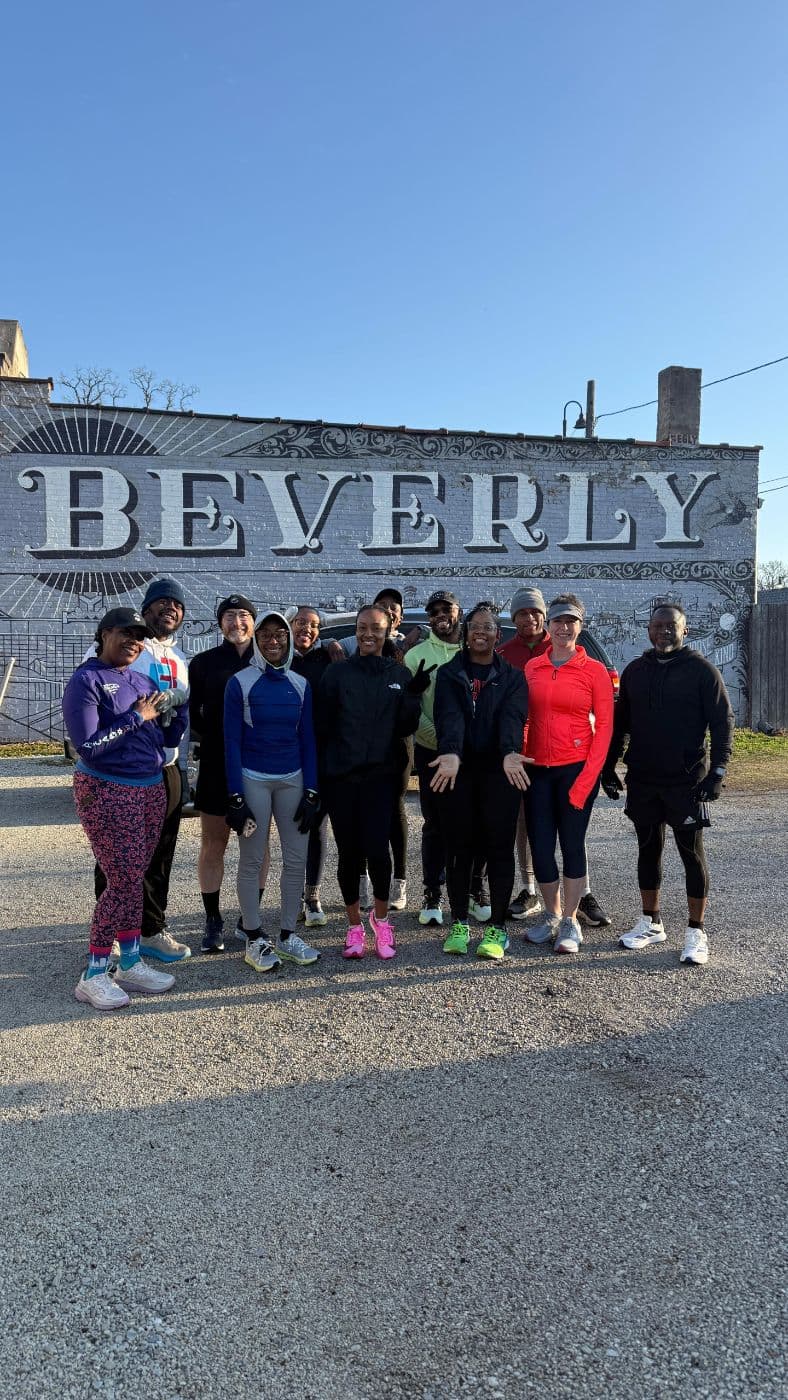
Chicago winter is long. If you only run when it's nice out, you'll lose months of fitness between November and April. The good news is that most winter days are runnable with the right layers and a little planning, and running with a group makes it much easier to get out the door.
Dress for mile two, not your front door
A common rule of thumb: dress as if it's 15 to 20 degrees warmer than it is. You should feel a little cold for the first few minutes. If you're warm standing still, you'll be soaked with sweat by mile two, and wet clothes get cold fast.
Layer like this:
- Base layer: a long-sleeve top that wicks sweat. Skip cotton.
- Mid layer on the coldest days: a light fleece or thermal top.
- Shell: a windproof jacket. In Chicago, wind is usually the bigger problem than the temperature.
- Bottoms: running tights. On very cold days, wind-blocking tights or a second layer.
Cover your extremities
Your hands, ears and face get cold first.
- Gloves or mittens. Mittens are warmer. Some runners wear thin gloves under mittens and take the mittens off as they warm up.
- Hat or headband that covers your ears.
- Neck gaiter or buff you can pull over your mouth and nose in the wind.
- Wool socks, and shoes with less mesh if you can.
Wind and the lake
Wind off Lake Michigan can make the lakefront much colder than streets a few blocks inland. On windy days, run into the wind first so it's at your back on the way home, when you're sweaty and tired. If the forecast calls for big waves, skip the lakefront altogether, since sections of the trail can close. Our Lakefront Trail guide has more.
Ice and snow
- Slow down and shorten your stride on slick surfaces.
- Pick main streets and park paths that get plowed or salted first.
- Traction cleats that slip over your shoes help a lot on packed snow and ice.
- Watch for black ice near the lake, under viaducts and at curb cuts.
Light and visibility
Sunrise comes late and sunset comes early in December and January. Wear something reflective and a light, even if you think you'll be done before dark. Drivers aren't looking for runners on a cold morning.
When to skip it
Some days aren't worth it. Move indoors or cut the run short when the wind chill is far below zero, when sidewalks are glazed with ice, or when you're already fighting a cold. Missing one run won't undo a season. Slipping on ice can.
Warm up inside, change fast after
Do a few minutes of easy movement indoors before you head out, like leg swings or walking lunges. When you finish, get out of wet clothes quickly. Your body temperature drops fast once you stop moving.
Run with people
The hardest part of winter running is leaving the house. A group run at a set time solves that. OnThe9 keeps running through winter on Saturday mornings, and the start time and spot for each week go up on our Strava club. Bundle up and come find us.
Common questions
How should I dress for running in cold weather?
A common rule of thumb is to dress as if it's 15 to 20 degrees warmer than the thermometer says, because you'll heat up once you're moving. Use a base layer that wicks sweat, add a windproof shell, and cover your hands, ears and neck.
Is it too cold to run outside?
It depends on wind chill, ice and how you feel. Many runners move indoors or cut a run short when the wind chill is far below zero or the sidewalks are icy. Skin can get frostbite quickly in extreme cold.
Do run clubs meet in winter?
Many Chicago run clubs keep meeting year-round, sometimes later in the morning. OnThe9 runs Saturday mornings year-round.